

Mind Over Matter
On Victor Hedman, Linus Ullmark, and a cultural inability to leave struggling players alone.

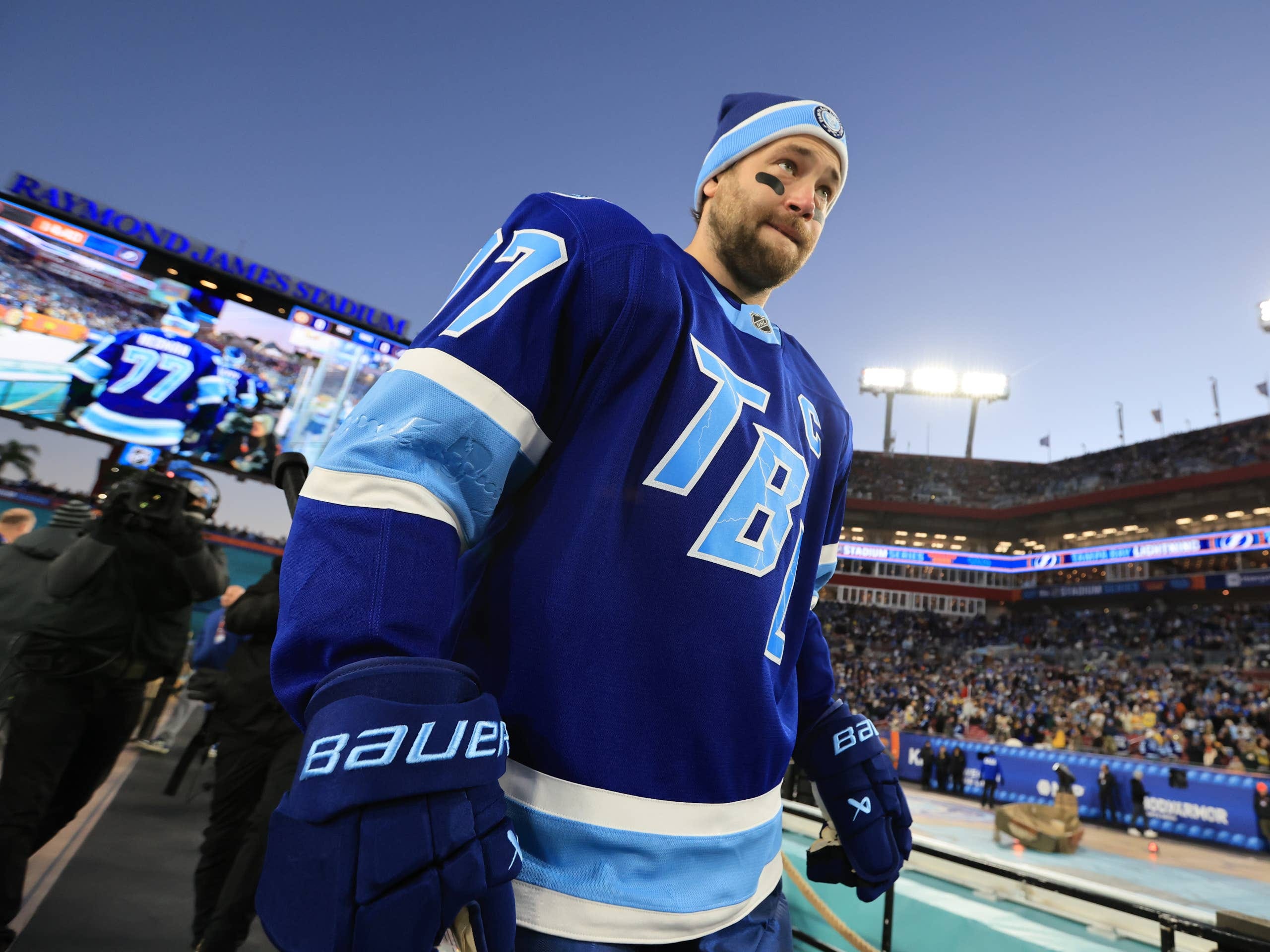
I’ve truthfully sat at my laptop for several days, contemplating if I’m the “right” person to write this piece, if it even needs to be written.
It does.
If you’re in the hockey world, you’ve probably seen Tampa Bay Lightning captain, Victor Hedman’s, recently released statement about his mental health and leave of absence from the team, starting in mid-March.


“I’ve spent most of my life in this game, and nearly all of my career with this organization. Wearing this jersey — and serving as captain — is the greatest responsibility of my professional life”, Hedman wrote. “That responsibility doesn’t only apply on the ice. Over the past couple of months, I made the decision to step away and focus on my mental health. It was not an easy decision, but it was the right one. I’ve always believed that being a leader means doing what’s best for the team. In this case, it also meant doing what was necessary to take care of myself, so I can be the best player, teammate, husband and father I expect to be.”
Earlier this year, Ottawa Senators goaltender Linus Ullmark did the same. Ullmark said that Hedman was a supporter of him throughout the process. And the same was given to Hedman from Ullmark. In his exit interview with the Lightning earlier this week, he told reporters that Ullmark and former teammate Steven Stamkos were some of his support system.

One thing the two also shared in common was the rumor mill, the 24-hour-gossip-disguised-as-”news”-cycle, the ugliest parts of toxic masculinity all at once.
I’m not going to be linking Bubba The Love Sponge’s radio segment on Hedman that he thought was a good idea to post to Twitter, because it would be completely contradictory to give him any more attention than he deserves — and it’s clearly what he wants. It’s the same rumor that was spread online about Linus Ullmark that exploded to the extent of the Sens having to release a statement about it, and equally as disgusting.
Both of these men — and men before them in the NHL, like Patrik Laine, who was subject to similar cruelty from sports media; like Jonathan Drouin or Kyle Beach, who was labeled a “bust”, like Alexandre Daigle, who was labeled as “lazy”. Despite the support that these men are able to access, it’s still not often enough in the face of tremendous stigma.
As much as I love working in sports media, before I went independent, I noticed a very ugly, very grotesque side to it. I noticed the hunting for vulnerability and earnestness, and how once it was found, it would be torn open like roadkill, in the public eye for everyone to digest. Even other writers weren’t immune to it. After I wrote an article about Patrik Laine’s journey in the summer of 2024, my editor, my boss — a man who held significant authority over me and my future in the hockey world — repeatedly asked me to write a follow-up to it about how Laine had found “a home” in Montreal, and how I had also “found a home” at his company. Each time, I declined, noting how deeply uncomfortable it made me. He wanted to profit off of my success with a deeply personal thing, despite him being insistent behind the scenes that I was a helpless little victim who couldn’t write any of her own work.
I also noticed that the more vulnerable a person is, the more vultures they have around them, whether it’s people in their personal life or in the media industry. Sometimes, like in my case (and my well-documented mental health journey), it’s both.
I’ll never understand how — or why — these sorts of things get so much attention and traction. One of my earliest memories is being a kid in my parents’ living room in Ohio, in early 2007, watching the paparazzi chase Britney Spears in the back of an ambulance. In my first year of college, I took a class that touched upon America’s history of freak shows. And today, the Internet exists, where there’s lolcows and constant torment of other people, particularly those with disabilities and mental health struggles.
In short: mental health remains a spectacle, and there’s sure as hell an audience for it; despite people like Ullmark, Hedman, Laine, Drouin, and me speaking up to decrease the stigma surrounding it. Even if the victim of the circus is practically perfect, like Hedman or Ullmark, who did absolutely nothing wrong; they’re still torn to shreds for the crime of existing. Hedman, Ullmark, and Laine’s masculinity were called into question by another man — different men each time. A radio host. A stranger on the Internet. A man with a podcast microphone. A team captain’s father. My mental capability was called into question by someone I couldn’t report to higher ups (because he was one of the founders of the company), nor did I know about until it was too late.
This is why people are afraid to speak up. And by understandable silence, the stigma continues onwards.
And yet, when players die young, too soon of preventable deaths, of overdoses and suicides, leaving loved ones behind, the response is always the same: “Why didn’t they ask for help? Why didn’t they speak up? It’s okay not to be okay.”
Long gone are these sentiments. We — as a culture, as an industry, as a collective — have to do better. The best way to do so? Sending support, and then leaving these people alone to heal. Giving them time to return to the game we all love — on their own terms. Giving them the space they need to discover themselves again, outside of the thing that they’ve shaped their world around since childhood.
When the audience leaves a stage show, it shuts down. The lights turn off. The cast and crew move on.
Why is it so hard for the media world to do the same?